
Buying to rent in a tense area in 2026: The guide to not make mistakes
Should you flee big cities or take advantage of opportunities? We decipher the 2026 rental market.
📅
19/6/2025


Investing in tense zone in 2026 remains the best way to secure your assets. In cities like Paris, Lyon or Bordeaux, rental demand is literally crushing supply. But be careful: the market has changed. Between theRent control which is becoming widespread and the DPE calendar which tightens rental conditions, profitability can no longer be decreed, it is negotiated upon purchase. Is it still a good idea for your wallet? We analyze the terrain to avoid pitfalls and maximize your performance.
What is a tense zone and why does it attract investors?
Let's start by defining what we call a tense zone. It has become the strategic playground for any investor looking for security. An area is said to be “tense” when demand greatly exceeds the supply of housing. This mechanically leads to high rents, a rental vacancy almost zero and strong real estate pressure.
Definition and list of tense areas in 2026
In 2026, the list grew. The decree now concerns more than 1400 municipalities. THERent control is now a reality in the majority of major French cities. It includes:
- Paris and Île-de-France (Plaine Commune, Est Ensemble, Grand-Orly Seine Bièvre).
- Lyon, Villeurbanne, Bordeaux, Bordeaux, Lille, Lille, Montpellier, Grenoble.
- The Basque Country and cities like Marseille, Nice or Annecy who have joined the system.
🔗 Source: PAP.fr — Official list of tense areas
Why do these cities attract investors?
The success of these areas is based on solid fundamentals. As a real estate hunter, I see that my clients prefer these sectors for four major reasons:
- Nearly zero vacancy rate : The property is rented in just a few days.
- Creditworthy tenants : You have the luxury of choosing among concrete cases (young employees, managers, students with guarantors).
- Valuation potential : In the long term, stone in tight areas remains a safe haven that is increasing in value.
- Guaranteed return : Even if it is moderate (often between 3% and 4.5% in 2026), it is constant and secured by market tension.
The key indicator: The supply/demand ratio
To fully understand, you have to look at the numbers. In a city like Lyon in 2026, we record on average 14 requests for 1 single ad of studio released. This imbalance protects the investor against the risk of loss of rent, one of the main obstacles to real estate enrichment.
What are the advantages of buying in a tense area?
Investing in an area under stress is a strategic choice, provided you understand its real performance drivers. In 2026, gross profitability is no longer everything; it is the fiscal strategy and the quality of the property that make the difference.
Maximum rental security
In these cities, “clean” goods never stay on the market. They are rented instantly if they meet the current criteria:
- A+ location (close to transport and shops).
- Energy renovation to standards (DPE D minimum).
- Adapted typology (furnished for small areas, shared accommodation for large apartments).
Attractive taxation in 2026
Some tense areas entitle you to specific mechanisms to boost your net profitability. We especially remember:
- LMNP (Non-professional furnished renter) : This is the queen strategy in 2026 to amortize the property and not pay taxes on your rents for 10 to 15 years.
- Denormandie : Ideal for investing in the old with work in eligible degraded city centers.
- Pinel+ : For new buildings with high environmental performance in target sectors.
As long as you respect the imposed rent ceilings, these tools can drastically reduce the taxation of your property income. This is where your real gain comes in.
But be careful with the limits: supervision, profitability, DPE...
Buying in a tense zone in 2026 also means dealing with serious obstacles that can eat away at your margins and complicate management. If you do not control these parameters, your “safe” investment can quickly become a financial abyss.
Rent control: a major constraint
Now, in almost all major cities, the rent cannot exceed the increased reference rent. This rule is closely monitored by the town halls. This drastically limits:
- Gross profitability : Especially if you buy a property at a high market price.
- The valorization of the work : Difficult to pass on the cost of a luxury renovation to the final rent.
🔍 Concrete example: A furnished one-bedroom apartment in Bordeaux center, purchased 260,000€, may not exceed 950€/month excluding expenses in 2026 (according to the new scale). Even with a terrace or a high-end kitchen, the Rent supplement remains risky and very legally supervised.
Gross profitability often under 4%
In cities, the price per m² remains stable at a high level, while rents are capped by decree. The result: gross profitability is low. To get out of it, you must play on the LMNP taxation to improve net after-tax returns.
Here is an overview of average returns in 2026:
The DPE wall: strainers banned in 2026
It's the big issue of the year. Since January 1, 2025, classified G accommodations have been prohibited to rent. In 2026, the pressure is increasing on classified housing F, whose rent is already frozen. This excludes a huge portion of the ancient park in the historic centers.
For an investor, this means that you have to anticipate a heavy work budget (insulation, carpentry, heating) before even looking for a tenant. If you have not included this cost in your purchase offer, your return collapses. According to ADEME, the cost of an efficient renovation can represent 15% to 20% of the value of the property.
Is it a good idea in 2026? Our strategic verdict
In 2026, the question is no longer whether to invest in a tense zone, but how do it without burning your wings. The market has matured, prices have stabilized, but regulations have become the justice of the peace.
👍 Yes, the investment is validated if:
- You are targeting Neighborhoods in transition (those who benefit from new transport lines or urban projects).
- You buy a property with a DPE already efficient (C or D) or if you have strong enough brains to manage a global renovation.
- You must aim for furnished rental in LMNP to turn low gross profitability into a net cash flow interesting thanks to amortization.
- You are accompanied by an expert to find properties Off-market and avoid emotional surges.
👎 No, run away from this project if:
- You expect a gross return of greater than 6% without major fiscal leverage.
- You buy without negotiating in saturated areas where prices per m² are disconnected from the capped rental reality.
- You are unaware of the constraints of DPE F : the cost of work in 2026 exploded and can ruin your financing plan.
The role of the real estate hunter: the secret weapon in a tense zone
In a market as saturated as that of 2026, looking alone on traditional portals is often like picking up the crumbs. Between alerts that arrive too late and group visits of 20 people, the individual investor is quickly exhausted. A real estate hunter like those on our team at Mecaza is not a simple intermediary: it is your armed arm for secure your operation A to Z.
Uncover “Off-Market” and under-rated nuggets
The hunter doesn't just scroll SeLoger. Its real value lies in its network: local agencies, trustees, notaries. In 2026, 15% of transactions of quality in tight areas are made in “Off-Market” (before publication). We identify poorly exploited assets:
- Les thermal colanders (DPE F or G) : These are the best opportunities of 2026. Because they scare traditional buyers, we negotiate them with discounts of up to 15%, largely offsetting the cost of renovation work.
- The potential for division : Transforming a poorly arranged large T3 into two optimized studios can increase your profitability by 2 points in a tense area.
Lock in compliance and the regulatory aspect
Investing in 2026 means navigating a legislative minefield. A hunter carries out a complete audit of the file before you even make an offer:
- Reference rent control : We check to the nearest cent whether the projected rent complies with the current framework to avoid any future recourse by the tenant.
- Analysis of the minutes of the general meeting : We track voted or future condominium works (renovation, insulation from the outside). Nothing is worse than a “good deal” that asks you 20,000€ condominium fees three months after purchase.
- Technical audit : We assess the real feasibility of moving from a DPE F to a DPE D to guarantee your right to rent.
A macro and micro vision of the sectors of the future
A good hunter doesn't sell a city, he sells a street. In 2026, rental tension is not uniform. We analyze the micro markets for you:
- Urban Anticipation : We know which district of Marseille will take 10% value thanks to the extension of the tramway or which area of Bordeaux is already overheated (and therefore to be avoided).
- Demand targeting : Is it better to buy near a university center or a business center in 2026? We adapt the research to the target (students, young workers, roommates) to guarantee Zero vacation days.
By entrusting your project to Mecaza, you are not only buying an apartment: you are buying a field expertise that turns a “correct” investment into a genuine one heritage success.
Conclusion: A winning strategy if you are well surrounded
Buying to rent in a tense area in 2026 remains an excellent asset strategy. It is the ideal base for building a real estate empire with peace of mind. But it is also a trap for investors who move forward blindly.
Today's success is based on three pillars:
- La cost control energy renovation.
- Optimizing the LMNP taxation.
- The selection of a strategic location through professional support.
If you want to take the plunge without making a casting error, a hunter MeCaza can help you find the profitable property where others only see constraints.

Article written by Mélanie Jacquet,
Forte d'une solide expertise immobilière, Mélanie Jacquet accompagne les particuliers dans leurs projets de vie et d'investissement.
A travers son blog, elle aborde des sujets variés autour de l'immobilier : des villes les plus rentables en France et en Espagne aux guides pratiques pour optimiser sa gestion locative, elle partage sans filtre ses succès et ses analyses de terrain.
Sa double casquette de responsable marketing et de passionnée d'immo lui permet de transformer des sujets complexes en stratégies actionnables pour bâtir un patrimoine solide.
To go further
26/3/2026
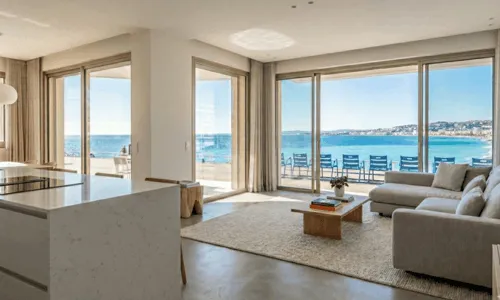
Alpes-Maritimes real estate hunter: secure your purchase on the French Riviera
Tired of missing out on the best gems in Nice or Cannes? Discover how a real estate hunter finds your future home before anyone else in the Alpes Maritimes.
Lire l'article ⭢
16/3/2026
Investment property hunter
Tired of buildings that have already been sold? Discover how an expert hunter unearths nuggets at an 8% return before anyone else.
Lire l'article ⭢
12/3/2026
Where to invest in Grand Paris? The 2026 expert guide
The metro is coming, prices are rising: discover the 3 gems of Grand Paris for a winning investment in 2026.
Lire l'article ⭢