
Buying a house with cryptocurrency: is it possible?
Moving from virtual assets to real estate is possible! Bitcoin, taxation, bank controls... Discover how to secure and successfully purchase real estate in France using your crypto gains.
📅
15/5/2026


The cryptocurrency market has evolved considerably in recent years. Bitcoin, Ethereum, and other digital assets are no longer used solely for speculation: some investors are now looking to use their crypto to buy real estate.
In several countries, real estate transactions using cryptocurrencies have already taken place, sometimes for several million euros. However, before taking the plunge, it's important to understand the applicable legal and tax rules. To better understand how crypto is taxed, it can be useful to learn about French taxation before any real estate transaction.
Can you really buy a house with cryptocurrency?
Yes, it is technically possible to buy real estate with cryptocurrencies, but this primarily depends on the seller and the legal framework of the country in question.
In most cases, cryptocurrencies are converted into euros or dollars before the official signing at the notary's office.
- Agreement between buyer and seller
- Conversion of crypto into traditional currency
- Compliance with tax obligations
- Verification of source of funds
- Validation by financial intermediaries
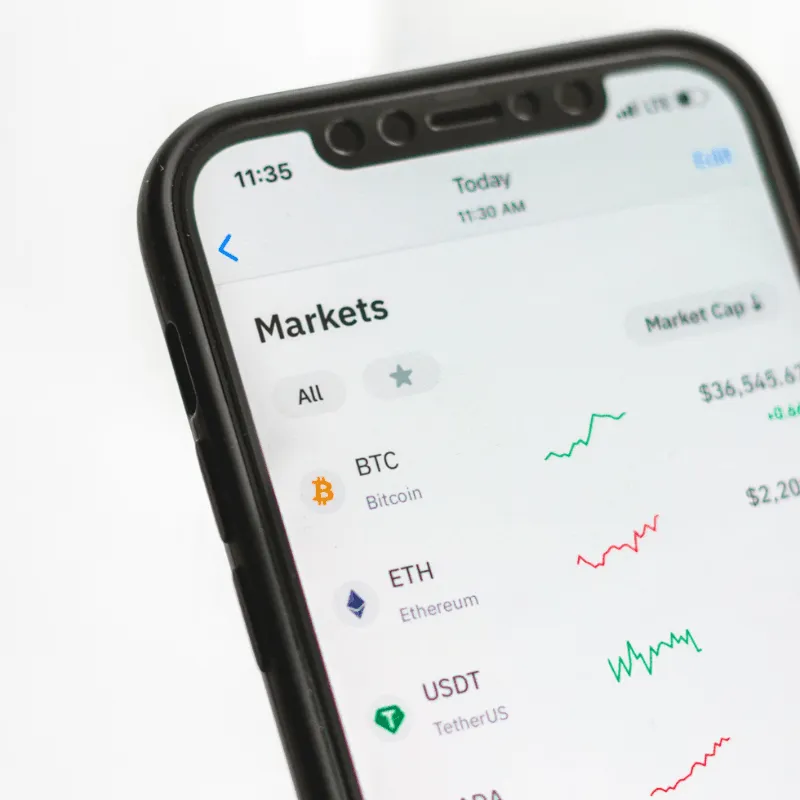
Why do some investors use crypto in real estate?
The interest of "crypto-investors" in real estate is no coincidence. It is a well-thought-out wealth management strategy that addresses three major objectives:
1. Realize and secure significant asset appreciation
The crypto-asset market has allowed many investors to generate exceptional gains in a few years. However, as long as these gains remain on the blockchain or on exchange platforms (exchanges), they remain virtual.
- The objective: Buying real estate allows you to materialize this digital wealth in the real world by transferring "volatile" profits to a tangible asset with high intrinsic value.
2. Simplify and accelerate international transactions
For non-residents, expatriates, or foreign investors wishing to buy a pied-à-terre or a rental investment in France, the traditional banking system can be discouragingly slow (international transfer delays, lengthy interbank controls, high exchange fees).
- The objective: Even if conversion to euros remains mandatory for the final transaction in France, using cryptocurrencies initially allows for the mobilization and transfer of significant capital internationally almost instantly, with network fees often negligible compared to traditional SWIFT transfers.
3. Implement strategic asset diversification
One of the fundamental principles of wealth management is not to put all your eggs in one basket. Crypto markets are characterized by brutal cycles (the famous Bull Runs and Bear Markets).
- The challenge: Reallocating a portion of digital profits to French real estate helps smooth out the overall risk of one's portfolio. By combining the high-performance (but risky) nature of digital assets with the stability and regularity of income from yield-generating real estate (such as furnished rental properties or commercial premises), investors can build a resilient and balanced portfolio.
What are the obstacles?
Despite the growing interest in cryptocurrencies, several challenges still remain.
How does a real estate transaction with crypto work?
In most cases, the purchase follows several steps:
- Agreement between parties on the price
- Verification of the origin of funds
- Potential conversion of cryptocurrencies
- Validation by the notary
- Finalization of the sale
The notary plays an essential role in securing the transaction and verifying legal compliance.
Which countries most readily accept this type of purchase?
Certain real estate markets are more open to cryptocurrency payments:
- Dubai
- Portugal
- United States
- Switzerland
- United Arab Emirates
In these countries, several specialized real estate agencies already accept payments in digital assets.
What are the risks to consider?
Investing digital gains in real estate is an excellent wealth management strategy, but it resembles an obstacle course of regulatory and financial challenges.
1. The extreme volatility of the digital asset market
The cryptocurrency market never sleeps, and its fluctuations can be brutal. Between the moment you sign a purchase offer and the day of signing the authentic deed with the notary (often a 3-month gap), the price of Bitcoin (BTC) or Ethereum (ETH) can vary by 20% to 30%.
- The risk: If the market collapses during the withdrawal or processing period, you risk no longer having the necessary capital in euro equivalent to honor the sale, which would expose you to legal penalties (often 10% of the property price).
- The expert's solution: We include a rapid conversion clause in the purchase offer, or we advise our clients to convert the necessary amount into stablecoins (such as USDT or USDC) as soon as the preliminary sales agreement is signed to lock in the value in euros.
2. The tax shock of the "Flat Tax" (The taxable event)
Many investors overlook a fundamental principle of French tax law: the exchange of a digital asset for real estate is a taxable event, just like a sale for euros.
- The risk: If you buy a house worth €500,000 directly with your crypto (or after conversion), the tax authorities will calculate the latent capital gain on that amount. In France, you are subject to the Prélèvement Forfaitaire Unique (PFU) or 30% Flat Tax. If your capital gain is significant, you will have to pay a substantial tax the following year, which can heavily impact your cash flow if you haven't anticipated this cost.
- The expert's solution: Work hand-in-hand with a tax lawyer from the start of your search. In some cases, using a corporate structure (such as an SCI subject to corporate tax or a Holding company) can optimize this asset transfer.
3. The hurdle of banking compliance and TRACFIN controls
This is the main sticking point in France. Notaries and traditional banks are subject to ultra-strict anti-money laundering and counter-terrorist financing (AML/CTF) obligations.
- The risk: Having funds blocked by the receiving bank or refused by the notary just days before the sale. If you cannot clearly prove the origin of every euro (or every crypto), the transaction will be cancelled and a TRACFIN report will be filed.
- The expert's solution: We do not arrange any property visits without first auditing the "purity" of the funds with our financial partners. It is imperative to provide a complete history of the exchanges used, proof of initial deposits in fiat currency, and to go through a PSAN (Digital Asset Service Provider) broker registered with the AMF to carry out the conversion.
Should you take the plunge and buy real estate with your crypto?
The answer is yes, but only if you are professionally advised. For an investor who has realized significant capital gains, real estate remains the best diversification tool. It allows for the transformation of virtual and volatile wealth into a tangible, income-generating, and inheritable asset.
However, the pioneering days when one could buy an apartment "directly" with complete uncertainty are over. Today, the success of a crypto-financed real estate project in France rests on three pillars:
- Meticulous tax planning .
- Flawless traceability from blockchain to banks.
- On-the-ground support from a property finder accustomed to these complex issues.
Conclusion
Real estate purchases with cryptocurrency are gradually becoming a reality in several countries. Even if this type of transaction remains a minority, it reflects the market's evolution and the increasing integration of digital assets into the real economy.
Before making this type of investment, it remains essential to fully understand the tax, legal, and financial implications to avoid unpleasant surprises.
If you would like support with your real estate purchase, I invite you to discuss with a MeCaza expert.
FAQ
Can you directly pay for a house with Bitcoin?
Yes, but in most cases, cryptocurrencies are converted into traditional currency before the final signing.
Are real estate purchases with crypto legal in France?
Yes, provided that tax obligations and controls related to the origin of funds are respected.
Do you need to declare your crypto gains when buying real estate?
Yes, capital gains realized during the conversion of cryptocurrencies may be subject to tax.


Mélanie Jacquet
With solid real estate expertise, Mélanie Jacquet assists individuals in their living and investment projects.
Through her blog, she discusses various topics around real estate: from the most profitable cities in France and Spain to practical guides for optimizing rental management, she shares her successes and her field analyses without filters.
Her dual role as a marketing manager and a real estate enthusiast allows her to transform complex subjects into actionable strategies to build a solid wealth.
To go further

13/7/2026
Buying a sea-view apartment in Nice: Which neighborhood should you look in?
Dreaming of waking up to the Bay of Angels? Discover our complete neighborhood guide to successfully buying a sea-view property in Nice without making a mistake.
Read the article.webp)
6/7/2026
Where to buy an apartment in Marseille in 2026? The guide to profitable neighborhoods
Marseille isn't a market you can just jump into. Discover our exclusive 2026 guide to identify truly profitable neighborhoods and avoid the pitfalls of the Marseille real estate market.
Read the article
22/6/2026
What are the most pleasant cities to live in during a heatwave?
Sick of sweltering every summer? Discover French cities where real estate still offers coolness and a pleasant lifestyle.
Read the article