
Do you really need to buy a new apartment? Here's what you don't know (yet)
Comfort, taxation, energy savings... but at what price? We do the sorting for you.
📅
6/5/2026
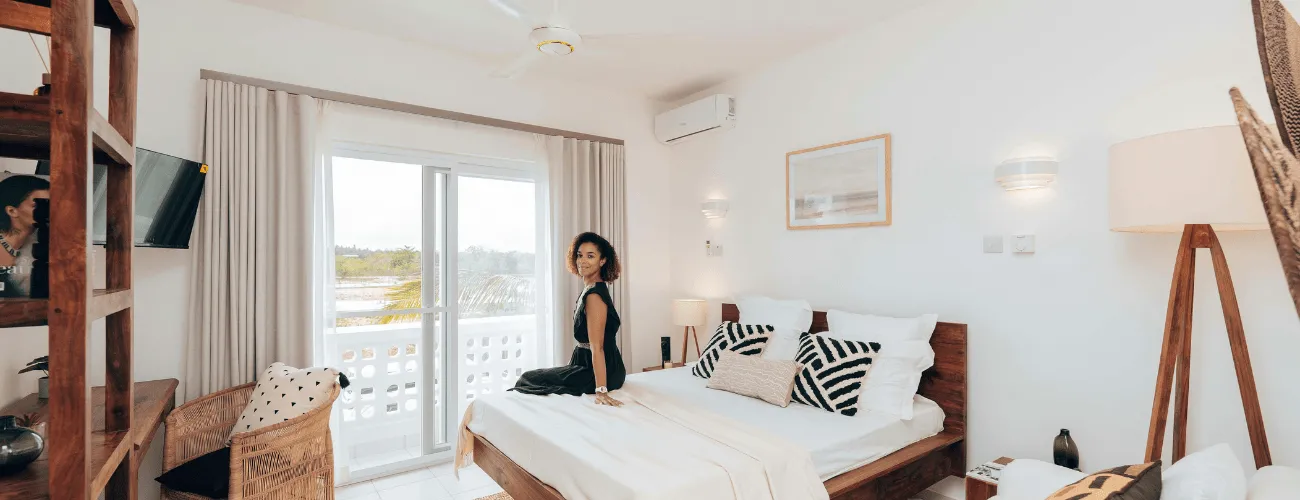

Buying a new apartment, known as VEFA (Vente en l'État Futur d'Achèvement - Off-Plan Sale) or off-plan purchase, is a strategic choice for many buyers and investors. With unique construction guarantees, reduced notary fees, and no short-term renovation work, the promises are numerous. However, new-build properties operate under very different financial and administrative mechanisms compared to older ones.
To help you make informed decisions, MeCaza offers an objective comparison of the pros and cons of new builds, as well as a step-by-step guide to secure your project from start to finish.
What are the advantages of buying a new apartment?
Opting for a new build offers immediate financial benefits and lasting living comfort that older properties cannot always guarantee.
- Reduced notary fees (2 to 3%): This is one of the most compelling financial arguments. For older properties, acquisition costs amount to approximately 7 to 8% of the property price. For new builds, they drop to between 2 and 3%. For an apartment priced at €250,000, this represents an immediate saving of up to €12,000 upon signing the authentic deed.
- Energy performance and RE2020 standards : New constructions comply with the RE2020 regulations, which mandate bioclimatic design and sustainable materials. Enhanced thermal insulation (triple glazing), optimized ventilation (dual-flow VMC), and modern heating systems (heat pumps, geothermal) guarantee you an Energy Performance Certificate (EPC A or B).
Concrete example: According to ADEME, a new 60 m² apartment in Toulouse rated DPE A costs less than €300/year in heating, compared to over €1,000 for an old, poorly insulated property (DPE E or F). In the long run, this green value will protect your assets against the ban on renting out energy-inefficient properties.
- Highly protective builder's warranties: Regulated by the Construction Code, these protections are unparalleled in older properties and ensure your peace of mind long after the keys are handed over:
- The Guarantee of Perfect Completion (1 year): Covers all defects and non-conformities reported during the first year.
- The Two-Year Warranty (2 years): Covers the proper functioning of removable fixtures (roller shutters, radiators, intercom).
- The Ten-Year Warranty (10 years): Protects the building against major defects compromising its structural integrity or rendering it uninhabitable (water ingress, major cracks).
- Property tax exemption: Some municipalities grant a temporary (partial or total) property tax exemption for the 2 years following the completion of the work. In Lyon or Montpellier, for a 65 m² property, this can represent a saving of €1,500 to €2,000 over two years.
- Property customization (TMA): When buying off-plan, you can request Buyer Modification Works to adapt the plans to your taste before construction (move a partition, install light wood flooring instead of tiles, add RJ45 sockets). You move into a turnkey property, without the hassle of post-purchase renovation.
What are the disadvantages of new-build properties?
To make your project a success, you must be aware of the constraints inherent in buying off-plan:
- A higher price per square meter: New-builds come at a high price due to the cost of technical standards and materials. Generally expect 15% to 25% higher initial cost compared to an older property with similar features.
- Delivery times and double financial burden: Between signing the reservation contract and receiving the keys, it often takes between 12 and 30 months. During this construction phase, you have to bear a double financial burden: your current rent combined with the payment of interim interest on your loan as the bank releases the funds.
- A sometimes more peripheral location: As available land in historic city centers is scarce, new developments are frequently located on the outskirts or in the heart of rapidly developing Concerted Development Zones (ZACs).
- Little room for negotiation: Unlike older properties where prices are negotiated directly with the seller, new-builds are based on a strict commercial pricing structure set by the developer, leaving little room for financial negotiation.
Be aware of the pitfalls when buying a new-build; read our article to learn more.
Comparison Table: Should You Buy New or Old?
The VEFA Purchase Process Step-by-Step
Buying a property that has not yet been built follows a very precise legal framework and timeline.
1. Signing the Reservation Contract
This preliminary contract specifies the apartment's characteristics (area, floor, orientation, all-inclusive price) and is accompanied by a security deposit held in an escrow account with the notary (5% of the price if the sale occurs within the year, 2% between 12 and 24 months). You benefit from a 10-day legal right of withdrawal.
2. Financing and Purchase Assistance
Financing a new build project requires a tailored strategy. Fortunately, several options can significantly ease the financial burden, especially for first-time buyers:
- The Zero-Interest Loan (PTZ): Enables financing a portion of the purchase interest-free (up to 40% in zone B1 like Nantes, Lyon, or Bordeaux, and 20 to 30% in zone B2 or C).
- Reduced VAT at 5.5%: Applicable if the project is located in a priority neighborhood (QPV or ANRU zone) subject to income conditions, representing a saving of 14.5% on the sale price.
- Local Grants: Similar to Nantes' "Affordable Accession" program, many major cities offer specific subsidies that can reach €20,000.
3. Progressive Fund Releases
For off-plan purchases (VEFA), your mortgage funds are released by your bank progressively, as construction progresses and according to strict legal limits:
- 35% upon completion of foundations;
- 70% upon watertightness (roof installation);
- 95% upon completion of works;
- 100% (the balance) upon delivery and key handover.
💡 MeCaza's tip: During the construction phase, you only pay the bank interest on the funds disbursed (interim interest) and your borrower's insurance. It's often possible to request a full deferral of capital repayment, so you only start amortizing your loan once you have the keys.
4. Handover and snag resolution
On the day of key handover, you thoroughly inspect the apartment to ensure it perfectly conforms to the plans and specifications. Any defects found (scratches, window adjustments) must be recorded in a handover report. The developer then has a legal period to carry out repairs at their own expense.
Why trust MeCaza with your new build purchase?
Buying off-plan requires impartiality and a keen technical eye. When dealing with property developers, buyers often find themselves at a disadvantage when it comes to analyzing a developer's financial stability, deciphering specifications, or ensuring the existence of a genuine Financial Completion Guarantee (GFA).
To ensure a secure purchase, MeCaza partners with Pierre Invest, a recognized specialist in new build properties. Thanks to this trusted partnership, you benefit from exclusive advantages:
- Centralized access to the entire market: No need to approach developers one by one. We analyze all new build programs available in France to select only those that match your criteria and offer the best guarantees (NF Habitat HQE certifications).
- 100% free support: The search and support fees are fully covered by the developer. You purchase your property at the direct developer price, with no additional cost, while benefiting from MeCaza's independent advice.
- Expert guidance at key handover: We guide you every step of the way, including during the delivery inspection, to identify defects and properly formulate your reservations.
➡️ Explore our new build buying service to get a free assessment of your project, calculate your financial assistance, and find your future new home with complete peace of mind!
FAQ: Answers to your questions about buying new
Can a new apartment be resold before delivery?
Yes. It is entirely possible through a contract assignment to a third party. This administrative procedure transfers your rights and obligations to a new buyer, but it requires a legal addendum and involves anticipating potential tax implications.
Does buying a new build take longer than an existing property?
Yes. While an existing property sale is finalized in 3 months, buying off-plan requires patience. Depending on the construction progress at the time of your reservation, you generally need to allow between 18 and 30 months before you can move in.
What checks should you perform on a developer before signing?
It is essential to check the developer's reputation (certified reviews, visits to their past projects) and to favor those backed by solid groups. Above all, demand written proof of their Financial Completion Guarantee (GFA) : this is the assurance that a banking institution will take over to complete the building if the developer goes bankrupt.


Mélanie Jacquet
With solid real estate expertise, Mélanie Jacquet assists individuals in their living and investment projects.
Through her blog, she discusses various topics around real estate: from the most profitable cities in France and Spain to practical guides for optimizing rental management, she shares her successes and her field analyses without filters.
Her dual role as a marketing manager and a real estate enthusiast allows her to transform complex subjects into actionable strategies to build a solid wealth.
To go further
13/7/2026
Buying a sea-view apartment in Nice: Which neighborhood should you look in?
Dreaming of waking up to the Bay of Angels? Discover our complete neighborhood guide to successfully buying a sea-view property in Nice without making a mistake.
Read the article.webp)
6/7/2026
Where to buy an apartment in Marseille in 2026? The guide to profitable neighborhoods
Marseille isn't a market you can just jump into. Discover our exclusive 2026 guide to identify truly profitable neighborhoods and avoid the pitfalls of the Marseille real estate market.
Read the article
22/6/2026
What are the most pleasant cities to live in during a heatwave?
Sick of sweltering every summer? Discover French cities where real estate still offers coolness and a pleasant lifestyle.
Read the article